


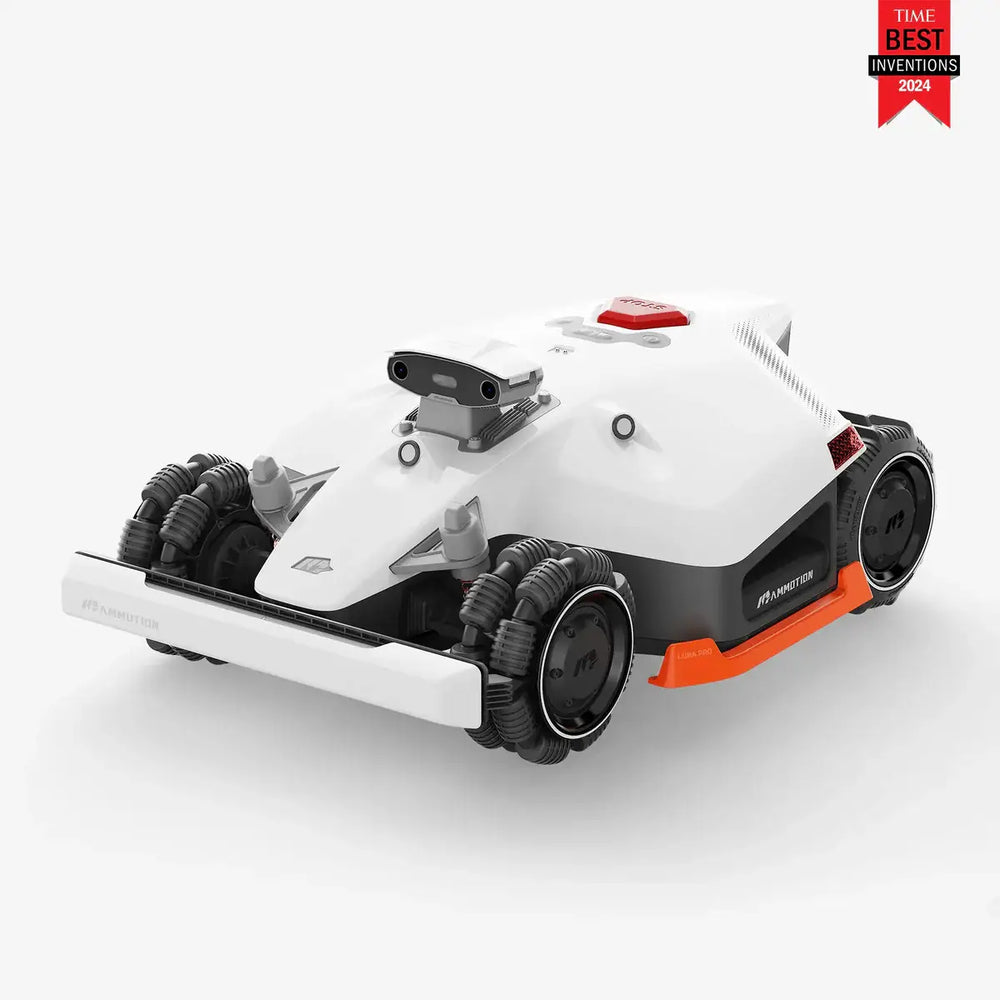
How to choose a robotic lawn mower for Australian conditions
The short answer: measure the grass that actually needs mowing, find the steepest part of the lawn, decide between wire-free and boundary-wire setups, then shortlist models whose manufacturer ratings comfortably cover all three. Price comes last.
Two lawns of the same size can need very different machines. A flat, open rectangle is easy; a sloping block with trees, a side passage and separate front and back lawns is not. Here is the checklist we use when helping customers choose.
1. Measure the grass, not the property
The land area on a title or real-estate listing includes the house, driveway, paths and garden beds. What matters is the area of grass the mower must maintain. Split the lawn into rough rectangles, measure each and add them up, or trace it on an online map.
Manufacturer coverage figures are ratings for good conditions and depend on the mowing schedule and pattern. Husqvarna, for example, publishes separate figures for systematic (striped) mowing and irregular mowing, and the irregular figure is lower. Leave headroom if your lawn is complex: for a 1,000 m² lawn with zones and obstacles, a mower rated for 1,200 to 1,500 m² is a sensible starting point.
2. Check slopes in percent, not degrees
Slope ratings are usually given as a percentage. A 50% slope is about 27°, and 100% is 45°. Many brands also quote a lower limit near the boundary edge than inside the mowing area. Find the steepest section that must be mowed and compare it with the full specification, not just the headline number.
All-wheel-drive and tracked models are built for steeper and rougher ground, but drive type alone doesn't make a mower suitable for a particular slope. See our guide to robotic mowers for slopes for the ratings across our range.
3. Choose a boundary system
A boundary-wire mower follows a cable laid around the lawn. It is a proven approach, but the wire has to be installed and maintained. Wire-free mowers create a virtual boundary using satellite RTK positioning, cameras (vision), LiDAR or a combination. They are easier to change when the garden changes, but still need mapping, and satellite-based systems need a reasonable view of the sky. Our wire-free vs boundary-wire guide covers the trade-offs.
4. Note the difficult parts of the garden
Write down narrow side passages, separate lawns joined by paths, tall trees, garden beds, play equipment and anywhere the mower could get stuck. Check how each shortlisted model handles these, and whether the manufacturer allows the route you need between zones.
5. Check what is in the box
The advertised model may not include everything your installation needs. Some systems need a reference station, a 4G module or installation materials, and some bundles include them. Compare the exact package, not just the model name.
6. Shortlist by suitability, then compare price
Once you know your real lawn area, slope and preferred boundary type, the field narrows quickly. Our Mower Finder shortlists models from five quick answers using published specifications, and Compare shows them side by side. You can also browse the full robotic lawn mower range.
Common questions
Are all robotic lawn mowers wire-free? No. Boundary-wire and wire-free models are both available, with different setup requirements.
Is the rated lawn area a guarantee? No. It is a manufacturer rating that depends on conditions, schedule and lawn complexity.
Do I need professional installation? It depends on the model and the site. Professional installation is available across Victoria; call our Rosebud store on 03 5986 2503 to talk it through.